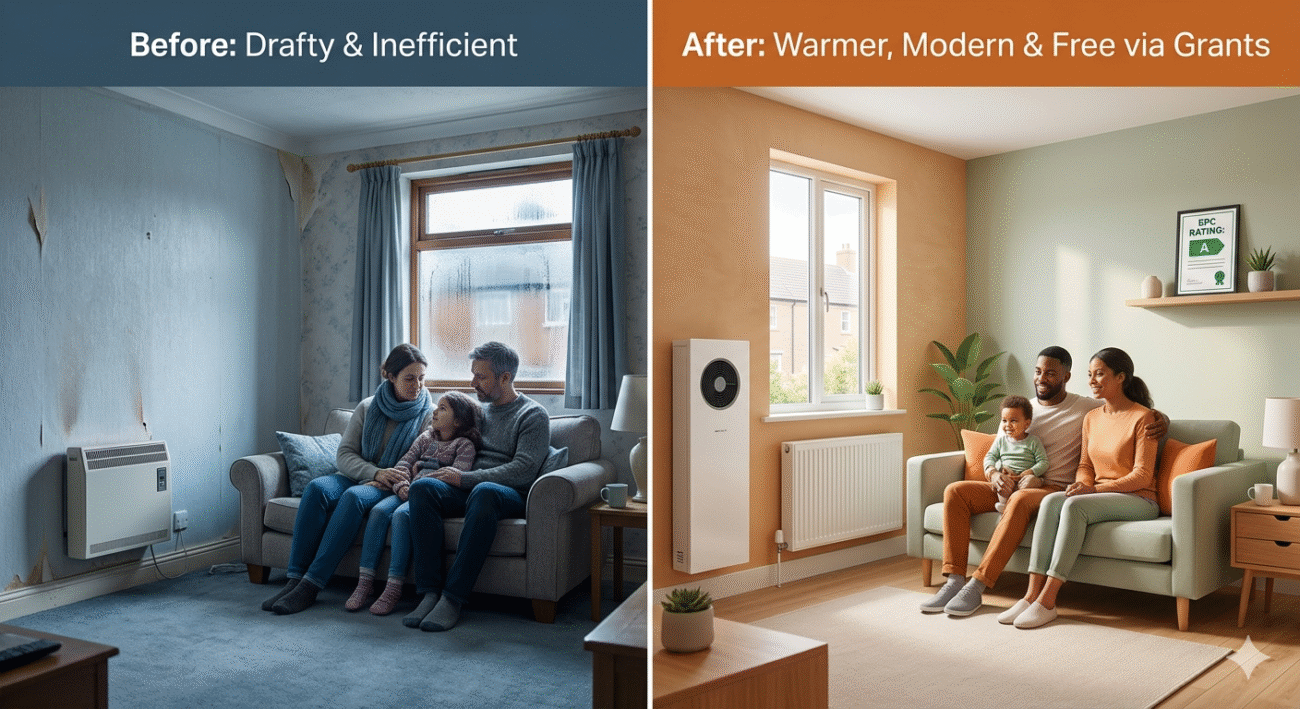
The Ultimate Guide to Free Home Improvement Grants in the UK (2026)
Navigating the landscape of home maintenance can be a daunting task, especially when faced with the rising costs of energy and essential repairs. For many homeowners and tenants across the United Kingdom, the financial burden of upgrading a property to modern standards is simply out of reach. However, a wide array of non-repayable funds exists specifically to bridge this gap. This comprehensive guide provides an exhaustive breakdown of the current “Free Home Improvement Grants” landscape in 2026, helping you secure the funding you deserve to improve living standards, reduce carbon footprints, and eliminate fuel poverty.
In 2026, the structural focus of UK housing support has shifted heavily toward the “Warm Homes Plan,” a massive reset in how domestic efficiency is handled. This plan integrates several existing schemes into a streamlined delivery model, aiming to lift millions out of fuel poverty by upgrading the nation’s aging housing stock. Whether you are looking to insulate a drafty loft, replace a failing boiler with a low-carbon heat pump, or adapt a home for a family member with a disability, there is likely a specific grant tailored to your needs. These are not loans; they are legally mandated non-repayable funds provided by central government, local authorities, and major energy companies.
1. Decoding the Core Eligibility Pillars for 2026
Before exploring specific grants, it is crucial to understand that eligibility is determined by three main ‘pillars’. In 2026, these criteria are more standardized across different schemes to simplify the application process.
The first pillar is the Property Requirement. Most grants are targeting “low-efficiency” homes. To qualify, your property must usually have an Energy Performance Certificate (EPC) rating of D, E, F, or G. If your home is already rated A, B, or C, you are considered “efficient enough” and will not qualify for free energy-focused upgrades.
The second pillar is Financial Status. You will typically need to be in receipt of a means-tested benefit (such as Universal Credit, Income Support, or Pension Credit) or have a total gross household income below a specific threshold. In 2026, this threshold is generally set around £36,000 per year (though this can vary slightly by region).
The third pillar is Ownership and Residency. Free home improvement grants are primarily designed for owner-occupiers (people who own the home they live in) and private tenants who have their landlord’s written permission. If you reside in social housing, the application process is handled differently (see heading 7).
2. The ECO4 Scheme: The ‘Whole-House’ Powerhouse
The Energy Company Obligation, now in its fourth iteration (ECO4), remains the single largest driver of funded energy efficiency improvements in the UK. The current scheme is legally mandated to run until December 31, 2026, obligating the UK’s major energy suppliers (such as British Gas, E.ON, and Ovo) to fund these upgrades.
What makes ECO4 distinct in 2026 is its “whole-house” or “multi-measure” approach. In previous iterations, a household might only receive a single upgrade, like new loft insulation. Under ECO4, energy companies are required to move a qualifying property up by at least two full EPC bands.
This means that if your home qualifies, an accredited surveyor will assess your property and design a comprehensive package of improvements. This could include, for example, a combination of:
- Solid or cavity wall insulation.
- High-performance loft insulation.
- First-time central heating systems (if your home currently relies on storage heaters).
- Non-gas heating systems, such as heat pumps, in specific circumstances.
The primary eligibility route for ECO4 remains the receipt of specific means-tested benefits. For those who do not receive benefits, access to ECO4 funding may still be possible through Local Authority Flexible Eligibility (LA Flex, discussed below).
3. Local Authority Flexible Eligibility (LA Flex): The Universal ‘Backdoor’
LA Flex is an extension of the ECO4 scheme that allows local councils to set their own additional eligibility criteria. This is designed specifically for vulnerable households who may be struggling financially but do not qualify for traditional means-tested benefits. In 2026, LA Flex has become the critical safety net for those in “fuel poverty” (spending more than 10% of their income on energy bills).
Local councils must publish a “Statement of Intent” on their website detailing how they identify vulnerable residents. Criteria often include:
- Income thresholds: Earning slightly above the benefit threshold but with high housing costs.
- Health Conditions: Residents with chronic conditions made worse by cold homes (e.g., cardiovascular disease, COPD, asthma).
- Age and Vulnerability: Homes with residents over 65, under 5, or pregnant individuals.
To access funding via LA Flex, you must apply directly to your local council, which will provide you with a “LA Flex Declaration” that you can then present to an ECO4-accredited installer.
4. The Boiler Upgrade Scheme (BUS): Strategic 2026 Expansions
For homeowners specifically focused on decarbonizing their heating systems, the Boiler Upgrade Scheme is the most direct application route. While not always covering 100% of the cost (it operates on a voucher system), the BUS has been significantly expanded in 2026 to make low-carbon technology highly affordable.
Currently, the scheme provides vouchers worth £7,500 toward the cost of installing an air source heat pump or a ground source heat pump. In 2026, the government has also simplified the rules regarding existing insulation requirements. Previously, a property needed an EPC with no outstanding insulation recommendations before a grant could be issued. The new guidance focuses on installing the heat pump first to secure the decarbonization benefits, while still strongly recommending that insulation improvements follow.
Crucially, the 2026 update has also added smaller, targeted grants (up to £2,500) for air-to-air heat pumps, which are ideal for smaller dwellings and flats where an external air-to-water unit is not technically feasible.
5. The Great British Insulation Scheme (GBIS)
The Great British Insulation Scheme was introduced to address a specific gap in support: households that do not qualify for the full “whole-house” treatment of ECO4 but still live in energy-inefficient properties. GBIS is heavily focused on delivery and is designed to provide “single, fast-acting measures.”
This scheme is targeted at homes in lower Council Tax bands (A to D in England, A to E in Scotland and Wales) with an EPC rating of D or below. GBIS typically covers the core insulation measures that make the quickest impact:
- Loft Insulation
- Cavity Wall Insulation
Because GBIS is a faster, simpler intervention, the delivery time is usually much shorter than ECO4. Applications are made directly through energy suppliers (you do not need to be their customer to apply to them) or via the central GOV.UK eligibility checker.
6. Warm Homes: Local Grant (Off-Gas Properties)
Formerly known as the Home Upgrade Grant (HUG2), the Warm Homes: Local Grant is a substantial pot of money (amounting to over £1 billion) specifically for homes in England that are not connected to the mains gas grid. Properties off the gas grid are often the most difficult to keep warm and typically rely on expensive oil, LPG, or inefficient electric storage heaters.
This grant is administered entirely by local authorities, who receive block funding to support residents. If your home qualifies and is off-gas, you could receive highly subsidized (often free) installations of:
- Air source heat pumps.
- Solar PV (electricity generating) panels.
- High-grade wall and loft insulation.
Eligibility is usually based on household income (under £36,000 in 2026) and a low EPC rating. Because it is delivered locally, the application process and exact level of support can vary by council, so contacting your local housing department is essential.
7. Support for Tenants in Social and Council Housing
If you rent your home from a local council or a non-profit housing association, you generally cannot apply for individual grants like BUS, GBIS, or ECO4 yourself. This is because these grants are tied to property ownership, and the application must be driven by the landlord.
Instead, social landlords must apply for funding through the Warm Homes: Social Housing Fund. In 2026, Wave 3 of this multi-billion-pound fund is currently rolling out. This fund provides massive grants to councils and housing associations to “retrofit” entire blocks or estates, often achieving an EPC rating of B or A.
Improvements under this scheme frequently include external wall insulation (which changes the appearance and efficiency of an entire building), communal low-carbon heating systems, and solar panels. Your role as a social housing tenant is to communicate with your housing provider and inquire if your specific estate is scheduled for upgrades under this fund.
8. Specialized Grants for Disability and Accessibility (DFG)
The need for home improvements isn’t always driven by energy costs; sometimes it’s driven by a requirement for safe and accessible living. The Disabled Facilities Grant (DFG) is a critical, mandatory grant provided by local councils in England, Wales, and Northern Ireland (with equivalent systems in Scotland) to help disabled people make necessary changes to their homes.
These grants can cover substantial works, including:
- Installing ramps and widening doors for wheelchair access.
- Installing stairlifts or through-floor lifts.
- Adapting heating or lighting controls to make them easier to use.
- Creating a “wet room” or installing a level-access shower.
In 2026, the maximum grant amount in England remains £30,000. The DFG is unique because it is usually not means-tested for adaptations made for disabled children under 19. For adults, it is means-tested based on income and savings. The process must begin with a formal assessment by an Occupational Therapist (OT), who determines that the requested adaptations are both “necessary and appropriate” for your specific needs.
9. Regional and Devolved Nation Specific Schemes
While the central Warm Homes Plan covers the main mechanisms in England, the devolved administrations in Scotland, Wales, and Northern Ireland have their own bespoke programs that often offer alternative or more generous assistance:
- Warmer Homes Scotland: This is Scotland’s national scheme offering substantial support to fuel-poor households, covering draught-proofing, new central heating, and insulation.
- Nest (Wales): The Welsh Government’s Nest scheme provides free advice and, for eligible properties, a tailored package of energy-saving improvements.
- Affordable Warmth Scheme (Northern Ireland): The main scheme in NI, aimed at households on a total income of less than £23,000, offering up to £7,500 for multiple measures.
If you live in one of these nations, you should explore these specific schemes as your primary route of assistance, although UK-wide obligations (like ECO4) still apply to suppliers operating in these areas.
10. Essential Application Action Plan (Step-by-Step)
Securing free home improvements in 2026 requires proactivity. The systems are streamlined, but you must initiate the process:
- Check your EPC Rating: Go to the official GOV.UK “Find an Energy Certificate” page and enter your postcode. If your rating is D or lower, note it down.
- Contact your Council: Visit your local council’s website and search for terms like “Home Improvement Grants,” “Energy Efficiency,” or “Statement of Intent” (for LA Flex). This is the best way to find local and off-gas funding.
- Engage with a Supplier: Check the website of any major energy supplier (e.g., British Gas, E.ON Next, Ovo). Most have simple, online eligibility checkers that take 2 minutes to complete and will immediately tell you if you might qualify for ECO4 or GBIS.
- Verify the Installer: Never agree to work from cold-callers. All grant-funded work must be carried out by installers who are TrustMark accredited or (for low-carbon technology) MCS certified. Always verify their credentials before signing any paperwork.
- Gather Evidence: Keep documentation ready, including recent energy bills, your most recent Council Tax bill, and any letters proving your receipt of means-tested benefits.
